

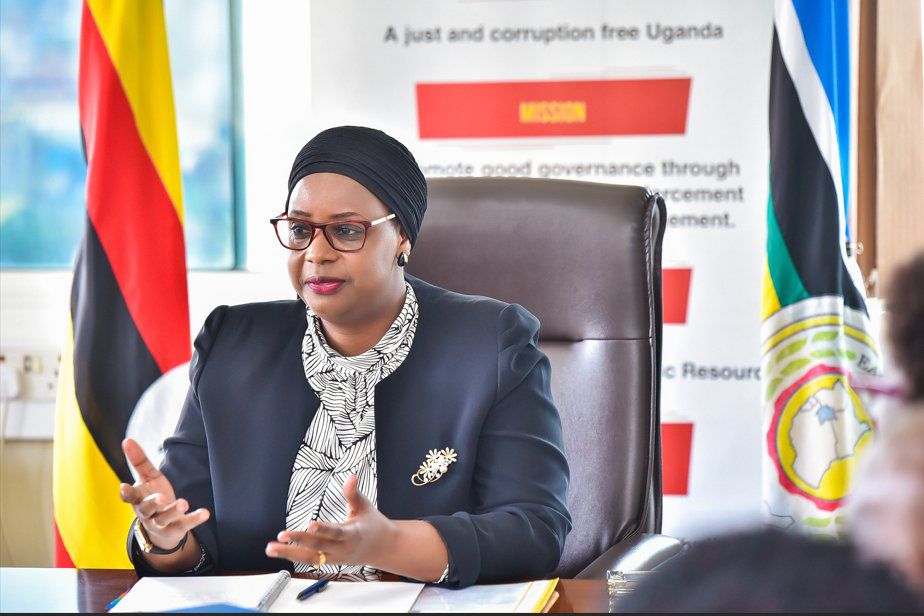
The Inspectorate of Government has appealed for an additional Shs25.98 billion in the 2026/27 Financial Year budget to strengthen Uganda’s anti-corruption efforts through expanded staffing, improved investigative capacity, acquisition of modern equipment, and specialized training for investigators and prosecutors.
The request was presented to Parliament through the report of the Legal and Parliamentary Affairs Committee on the 2026/27 Ministerial Policy Statement of the Inspectorate of Government.
The report was tabled by the committee’s Vice Chairperson, John Teira.
According to the report, the additional funding is necessary to respond to rising corruption cases, improve investigations, and enhance prosecution of complex and high-profile corruption scandals.
Lawmakers were informed that the cost of investigating corruption cases has significantly increased, with high-profile investigations estimated to cost up to Shs20 million per case, while ordinary cases cost between Shs3.5 million and Shs5 million to conclude.
Teira told Parliament that the Ministry of Finance had allocated only Shs 6 million against a requirement of Shs5 billion for investigations, a gap lawmakers described as inadequate to support effective anti-corruption work.
“This will not be sufficient as the Inspectorate of Government continues to receive urgent requests to investigate corruption cases,” he said.
The Inspectorate is seeking Shs 4.4 billion to acquire modern investigative equipment, which Parliament said is critical for improving the quality and effectiveness of investigations.
The proposed tools include covert surveillance systems, encrypted communication devices, digital forensic equipment, data analytics software, and portable evidence documentation kits.
Lawmakers noted that corruption has become increasingly sophisticated, requiring advanced technology to detect, investigate, and prosecute offenders effectively.
“The investment is critical to strengthening the institution’s capacity to effectively detect, investigate and prosecute corruption and related offences,” Teira said while presenting the committee report.
The Inspectorate also requested Shs 15.6 billion to recruit 100 additional technical staff to manage a growing workload driven by increasing corruption complaints and public reporting.
Parliament was told that the Inspectorate currently operates with 407 staff against an approved establishment of 596, representing only 68 percent staffing capacity.
According to the committee report, corruption complaints have nearly doubled in recent years, rising from 1,529 cases in FY2020/21 to 2,942 cases in FY2024/25. This surge has resulted in a backlog of more than 2,000 unresolved cases.
Teira said the additional recruitment would help strengthen investigations, support asset declaration verification, and improve oversight of government programmes such as the Parish Development Model (PDM).
“Without a corresponding increase in investigative staff support, the Inspectorate continues to face mounting pressure in handling corruption cases across the country,” he said.
The Inspectorate has also requested Shs 4.2 billion to procure new vehicles for both headquarters and regional offices, citing an aging and unreliable fleet.
Parliament heard that 78 percent of the Inspectorate’s vehicles are due for disposal, including 34 units that have exceeded 240,000 kilometres and 92 vehicles that are more than five years old.
Additionally, six vehicles destroyed during the 2021 bomb blasts have not been replaced.
The committee report noted that the Inspectorate spends about Shs 1.5 billion annually on vehicle maintenance due to the deteriorating condition of its fleet.
Lawmakers also raised concerns over frequent breakdowns of vehicles used by senior officials, including the Inspector General of Government and deputies, during field operations.
“For the last ten years, no funds have been allocated to the Inspectorate of Government for procurement of vehicles. To ensure safe and efficient operations, the institution requires new vehicles for regional offices and the head office,” Teira said.
In addition to staffing, equipment, and vehicles, the Inspectorate is seeking Shs 1.52 billion for specialized training in investigations, prosecutions, digital forensics, and asset tracing.
The training is intended to improve staff capacity in handling complex corruption cases, shorten investigation timelines, enhance evidence quality, and increase conviction rates.
“This capacity building will strengthen staff skills and improve the Inspectorate’s effectiveness in handling high-profile and technically sophisticated corruption cases,” Teira said.
If approved, the funding is expected to significantly enhance Uganda’s institutional capacity to investigate and prosecute corruption at both local and national levels.
